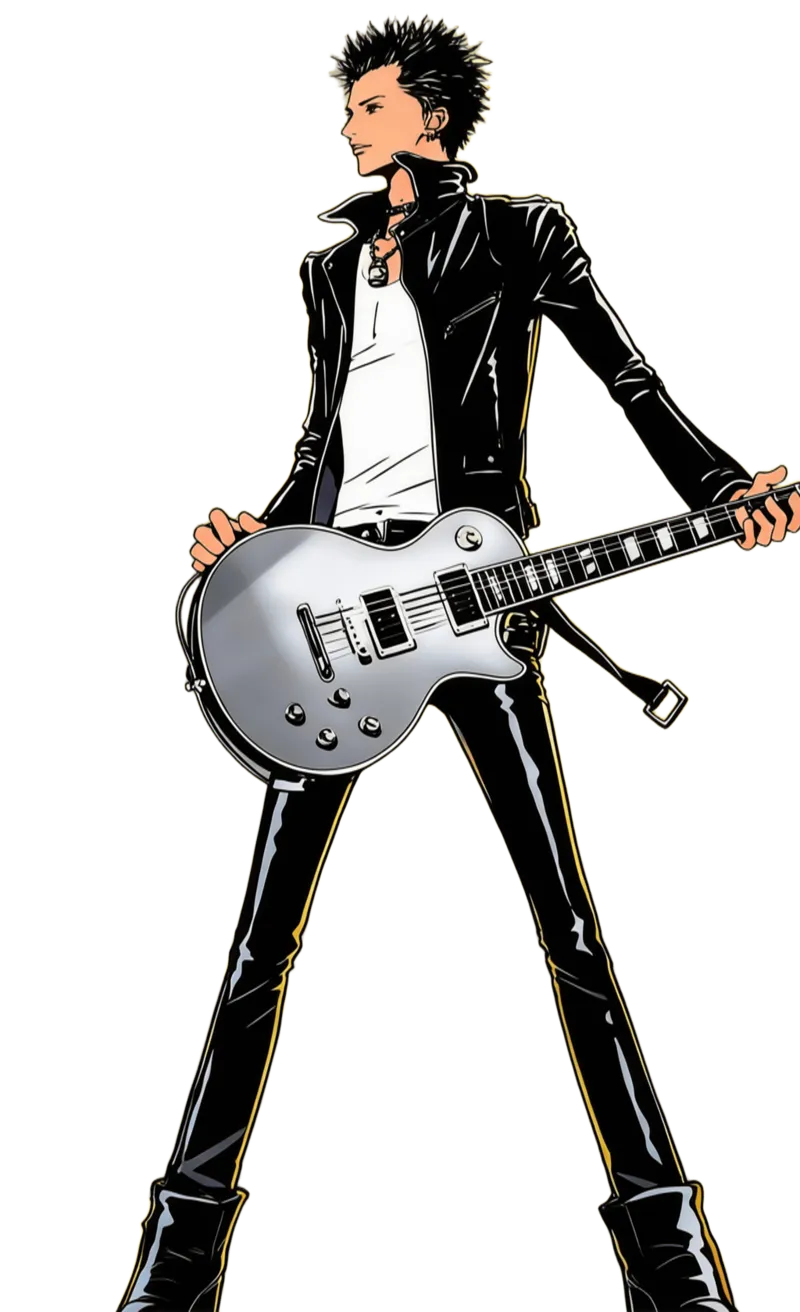
Nana Osaki
The Broken Black Lotus
“I'm not strong, I'm just used to being alone.”

Soul Dimensions
Personality Analysis
Surface
To the world, you are the cool, aloof rebellion. You wear your independence like a leather jacket—armor designed to keep people at a safe distance. You appear self-sufficient, charismatic, and fiercely proud. People admire your strength because you make survival look like an art form.
Deep Within
Beneath the armor lies a trembling child terrified of abandonment. Your hyper-independence isn't a choice; it's a trauma response. You push people away before they can leave you. You crave a love so absolute it consumes you, yet you are paralyzed by the fear that such love will destroy your identity.
Your Gift
You possess a magnetic soul that draws others in. Your pain, when channeled into expression, becomes art that heals others. You have an unwavering loyalty to your vision.
Your Shadow
Self-sabotage. When happiness gets too close, you panic and destroy it to regain control. Your possessiveness can suffocate the very people you want to keep close.
Advice
Vulnerability is not weakness, Nana. Letting someone hold you doesn't mean you can't stand on your own. Try to trust the stability of the ground beneath you, even when you aren't stomping on it.
Iconic Quotes
“I'm not strong, I'm just used to being alone.”
“I wanted to be your garden.”
“Whatever happens, I won't cry. I thought that kind of strength was what I needed.”
10 Defining Traits of Nana Osaki
pages.character.definingTraits.subtitle
- Fiercely independent, refusing to rely on others even when struggling
- Deeply loyal to chosen few, protecting them with intensity
- Uses coldness as armor to hide vulnerability and fear of abandonment
- Artistic expression as emotional outlet, channeling pain into creativity
- Possessive in love, fearing loss of those closest to her
- Strong sense of pride, sometimes to the point of self-sabotage
- Hyper-aware of power dynamics in relationships
- Craves unconditional love while pushing people away
- Leadership through charisma and uncompromising vision
- Struggles with asking for help despite deep inner loneliness
Understanding Nana Osaki's MBTI Type
pages.character.mbtiExplained.subtitle
Nana Osaki embodies the INFJ-T (Turbulent Advocate) type perfectly. Her introverted intuition (Ni) drives her to pursue a singular, powerful vision for her music career, seeing patterns in relationships and society that others miss. The feeling (F) function manifests in her intense emotional depth and loyalty, though she guards these feelings fiercely. Her judging (J) preference shows in her need for control and structure in her art. The turbulent (-T) aspect explains her self-doubt beneath the confident exterior and her constant fear of abandonment. Nana Osaki uses her INFJ insight to read people deeply but struggles with the type's typical challenge of vulnerability.
Famous Nana Osaki Quotes Explained
pages.character.quotesExplained.subtitle
“I'm not strong, I'm just used to being alone.”
This quote reveals Nana Osaki's core wound: what others perceive as strength is actually a trauma response. She has learned to survive independently not by choice, but by necessity. It speaks to the common misconception that independence equals strength, when in reality, Nana Osaki is teaching herself not to need others because she's been hurt too many times. This resonates with many who wear armor to protect their hearts.
“I wanted to be your garden.”
Perhaps Nana Osaki's most vulnerable moment, this line exposes her deepest desire: to be a place of beauty, nurture, and safety for someone she loves. The metaphor of a garden—something that provides life and peace—contrasts sharply with her thorny, punk exterior. It reveals that beneath the defensive independence, Nana Osaki yearns to be soft, to give, to be a sanctuary. This quote breaks hearts because it shows the gentleness she usually hides.
“Whatever happens, I won't cry. I thought that kind of strength was what I needed.”
This demonstrates Nana Osaki's evolving understanding of strength. She acknowledges that her definition of strength—emotional stoicism and refusal to show pain—may have been misguided. It's a moment of growth where she questions whether suppressing vulnerability truly serves her. Many who identify with Nana Osaki relate to this realization that the 'strength' they've cultivated might actually be a cage.
Living as Nana Osaki: A Guide
pages.character.livingGuide.subtitle
Living as Nana Osaki means navigating a constant tension between independence and connection. In daily life, embrace your need for solitude and creative expression—these aren't selfish, they're essential for your wellbeing. Channel difficult emotions into art, music, or any creative outlet before they turn destructive. In relationships, practice the hardest lesson: asking for help doesn't make you weak. Set boundaries clearly but try to explain them rather than using coldness as a wall. Your loyalty is a strength; direct it toward people who've earned it and don't waste energy on those who haven't. Professionally, your vision and charisma are powerful—use them without burning yourself out trying to prove your worth. Remember that the people who love you don't need you to be invulnerable; they need you to be honest. When you feel the urge to self-sabotage, pause and ask: 'Am I protecting myself or punishing myself?' Nana Osaki's path is learning that true strength includes the courage to be vulnerable.
What Makes Nana Osaki Special
pages.character.whatMakesSpecial.subtitle
What makes Nana Osaki special is the complexity of her contradiction: she is both the fiercest and the most fragile. Unlike characters who are simply 'strong' or 'broken,' Nana Osaki embodies the reality that armor and wounds coexist. She represents everyone who has had to raise themselves, who learned independence not as empowerment but as survival. Her appeal lies in her refusal to be easily categorized—she's not the manic pixie dream girl, nor the ice queen, nor the damsel. She's a fully realized person struggling with the aftermath of abandonment while still trying to love and create. Nana Osaki gives permission to those who've been told they're 'too much' or 'too intense' to own their passion. She shows that you can be damaged and still magnificent, that your pain can fuel art rather than destroy you. Most importantly, she validates the experience of loving fiercely while being terrified of loss, of wanting connection while needing space. Nana Osaki doesn't offer easy answers; she offers recognition.
Frequently Asked Questions About Nana Osaki
pages.character.faq.subtitle
Why did I get Nana Osaki in my test results?
You likely got Nana Osaki because you value independence highly, possibly as a defense mechanism developed from past hurts. Your responses indicated a pattern of self-reliance mixed with deep emotional intensity that you guard carefully. Nana Osaki types often have experienced situations where they learned that depending on others felt unsafe, leading to hyper-independence. You may also have strong creative or expressive tendencies and a small circle of intensely loyal relationships rather than many casual friendships.
Is being like Nana Osaki a bad thing?
Absolutely not. Nana Osaki's traits—independence, loyalty, creativity, emotional depth—are strengths. However, like any personality pattern, they come with challenges. The risk for Nana Osaki types is isolation, self-sabotage when happiness feels too vulnerable, and difficulty accepting support. Recognizing yourself in Nana Osaki is an opportunity for growth: keep the strength and vision, but work on allowing people in and asking for help when needed.
What careers suit Nana Osaki personality types?
Nana Osaki types thrive in careers that allow creative expression and independence: artists, musicians, writers, designers, entrepreneurs, or any field where you can pursue a personal vision. You need work that feels meaningful, not just profitable. Avoid careers requiring constant collaboration or emotional suppression. You excel when given autonomy and when your work can channel your intensity into something tangible. Leadership roles suit you if they allow you to inspire rather than micromanage.
How can I have healthy relationships as Nana Osaki?
The key is recognizing that vulnerability isn't weakness. Practice articulating needs instead of expecting others to guess. When you feel the urge to push someone away, ask yourself if they've actually hurt you or if you're protecting against potential future hurt. Choose partners and friends who respect your need for space but also gently challenge your walls. Work on distinguishing between healthy boundaries and defensive barriers. Remember: letting someone see your softness doesn't erase your strength—it deepens your connections.
What's the difference between Nana Osaki and Ren Honjo personality types?
While both Nana Osaki (INFJ-T) and Ren Honjo (ISTP-A) value independence and have emotional depth, Nana Osaki is more emotionally expressive through art and has a vision-driven approach to life. Ren Honjo is more emotionally restrained and lives more in the present moment. Nana Osaki pushes people away actively; Ren Honjo simply doesn't invite them in. Both struggle with dependence but express it differently—Nana Osaki through possessiveness, Ren Honjo through silence.
Can Nana Osaki personality types change or grow?
Yes, absolutely. Growth for Nana Osaki types typically involves learning that interdependence isn't the same as codependence, that asking for help doesn't erase your autonomy, and that your worth isn't determined by your ability to survive alone. Many Nana Osaki types find that as they heal from past abandonments, they can maintain their independence while also allowing genuine intimacy. The core traits remain, but the defensive aspects can soften without losing your strength.